- Home
- About Us
- Products
- Edge Banding Machine
- Pre-Milling Full Automatic Edge Banding Machine
- PVC Edge Banding Machine
- Interior Small Automatic Edge Bander
- Mini Edge Bander
- Automatic Edge Banding Machine
- KM08R Portable Edge Banding Machine
- Semi Auto Edge Bander With Top Bottom Trimmer
- Modular Furniture Machine Semi Edge Bander With Trimmer
- Handy Portable PVC Edge Banding Machine
- Manual Edge Bander Machine
- Automatic Edge Bander
- STEB - 05 Automatic Edge Bander
- Automatic PVC Edge Bander With EndCutting Edge Rounding Spray With Buffing
- Semi Edge Bander Machine
- Automatic Edge Bander Machine
- Edge Bander Machine
- CNC Routers Machine
- CNC Router Wood Engraving Machine
- Atc Cnc Router Machine
- CNC Router Wood Working Machine
- Wood Cnc Router Machine
- CNC Stone Engraving Machine
- Automatic CNC Wood Router Machine With Vacuum Bed
- CNC Servo 3D Wood Router Machine
- CNC Acrylic Router Machine
- Advertising CNC Router Machine
- Fully Servo Cnc Router Machine Manufacturers In Ahmedabad
- Peumatic Trimmer
- Engraving Machine
- Panel Saw
- Hot Press Machine
- Wood Working Machines
- Wood Panel Saw Machine
- Panel Saw Machine
- Edge Bander With End Cutting
- Cold Press Machine
- Precision Sliding Table
- Vacuum Membrane Press
- Multi Boring Machine
- Multiple Boring Machine
- PVC Corner Trimming Machine
- Double Bag Dust Collector
- Manual Edge Bander
- Cold Press Plywood Machine
- Sliding Table Panel Saw / ST3200-B
- Pvc Edge Banding Trimmer And End Cutter
- Sunmica Plywood Laminate Cold Pressing Machine
- Panel Saw ST 3200 A
- Small Panel Saw Machine
- Plywood Cold Press Machine
- Portable Side Multiple Wood Boring Machine
- Automatic Edge Bander With Corner Rounding
- Heavy Duty Power Feeder For Wood Working For Spindle Moulder
- Plywood Pallet
- Edge Banding Machine
- Updates
- Gallery
- Contact Us
Cold Press Machine Manufacturers In Gujarat
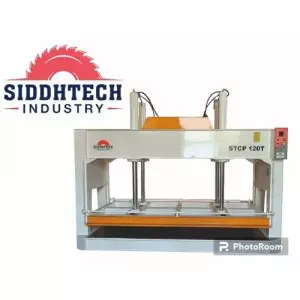
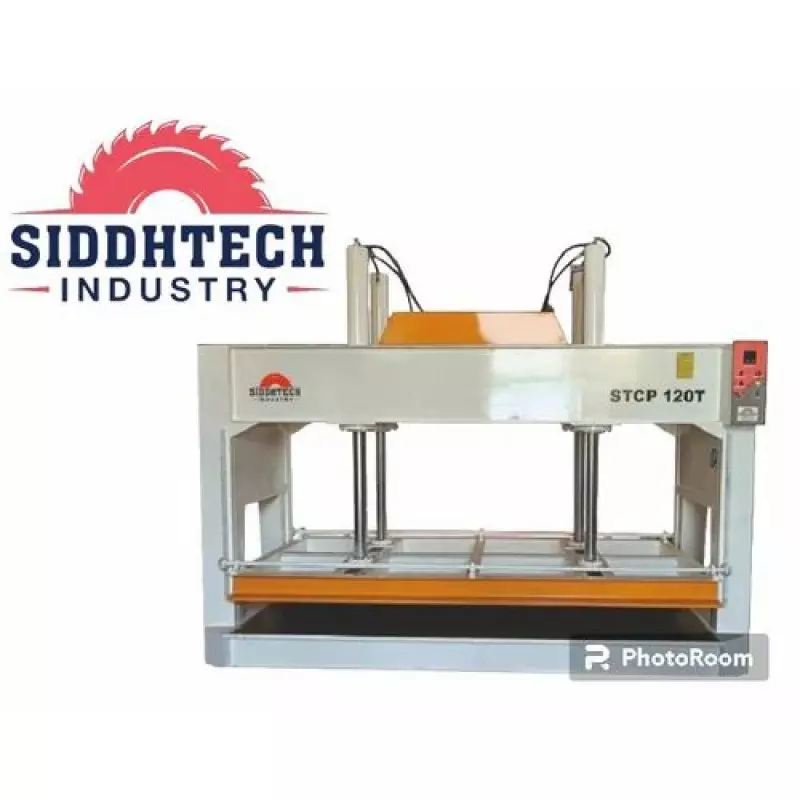
Details of Cold Press Machines
1. A Clear Overview of Cold Press Machine Operations
We are beginning with a practical overview. A cold press machine applies controlled pressure without heat to shape, bond, or compress materials. This process preserves material integrity while ensuring uniform results. Cold pressing is widely used where dimensional accuracy and surface quality are critical.
2. Streamlining Operations Through Smart Logistics
We are focusing on operational flow. Cold press machines are designed to integrate easily into existing production lines. Simple loading and unloading mechanisms reduce handling time, while compact layouts improve factory logistics. This streamlined movement of materials minimizes bottlenecks and keeps production steady.
3. Achieving Faster Production Cycles
We are improving time efficiency. Cold press machines operate with short cycle times because there is no heating or cooling delay. Rapid press-and-release sequences allow continuous operation, making them ideal for high-volume manufacturing environments where speed directly impacts output.
4. Reducing Costs With Efficient Machining
We are prioritizing cost efficiency. Cold press machining consumes less energy compared to thermal processes and reduces material waste. Lower operational costs, minimal maintenance requirements, and extended tool life make cold press machines a financially sound choice for long-term production.
5. Working Seamlessly With Multiple Materials
We are expanding versatility. Cold press machines can process wood panels, composite boards, laminates, plastics, rubber components, and certain metal assemblies. This flexibility allows manufacturers to use one machine for multiple applications without compromising performance.
6. Main Features That Define Performance
We are highlighting what matters most. Key features include high-pressure hydraulic systems, uniform force distribution, adjustable pressure settings, rigid frame construction, and precise control panels. These features ensure consistent bonding, accurate shaping, and repeatable results across every cycle.
7. Understanding Machine Specifications
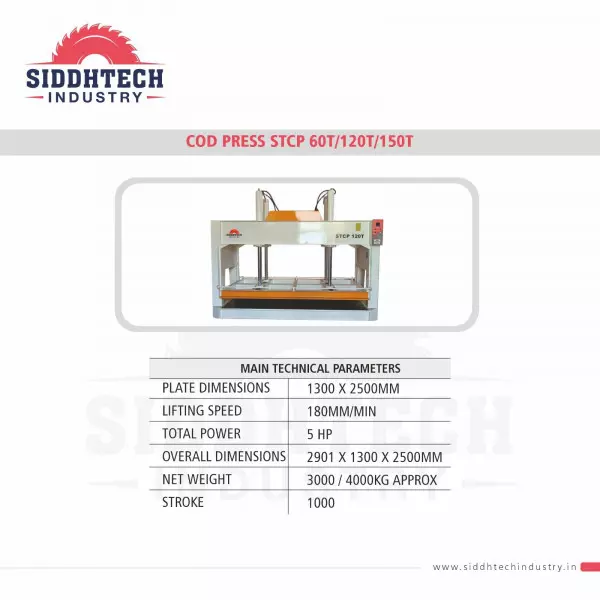
We are clarifying technical capabilities. Typical specifications include pressing force capacity, platen size, stroke length, pressure range, cycle time, and power requirements. These specifications help match the machine to production demands and material thickness requirements.
Offered Product

Cold Press Machines
Automation GradeAutomaticModel Name/NumberAdvanced Model STCP 120 TonProduct Type120 Ton Flush Door Cold Press MachineBrandSTCP 120 Ton Siddhtech IndustryCountry Of OriginMade In IndiaManual Cold Press System Its Like Coldpress / Laminate Press Manual SystemEstablished In Year 2020, Siddhtech Industry is A Manufacturer and Trader of High Quality Engraving Machine, Edge Banding Machine, CNC Routers Machine&n... Read moreCold Press Machine Manufacturers In Gandhinagar
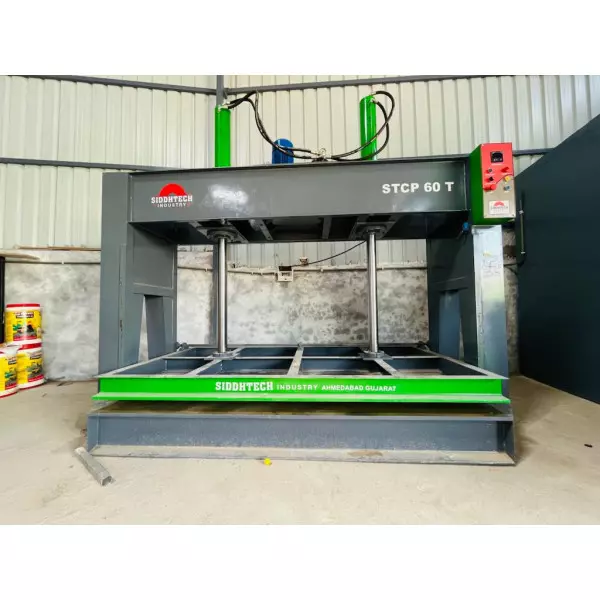
Cold Press Manufacturing ApproachWe Are A Skilled Production Team Engaged In Plywood And Panel Manufacturing Processes. We Focus On Precision, Durability, And Consistency By Using Advanced Machinery. Among The Essential Equipment In Our Facility, The Cold Press Plywood Machine Plays A Major Role In Ensuring Strong Bonding And Uniform Panel Quality.Purpose Of The Cold Press MachineWe Use A Cold Press Plywood Machine To Press Glued Plywood Layers Under Controlled Pressure Without Applying Continue
Cold Press Machines Dealers In Haryana
Efficient And Reliable Lamination Solution 2026We Are Distributing The Plywood Lamination Cold Press As A Productive Equipment Choice For Small To Medium-scale Plywood Lamination Projects. Unlike Hot Presses, This Machine Applies Consistent Pressure Without Heat, Ensuring Even Adhesion Of Laminates To Plywood Sheets. Compact And Energy-efficient, It Is Ideal For Workshops, Furniture Manufacturers, And Plywood Factories Aiming For Uniform Lamination With Minimal Operational Cost. Its User-frien Continue
Cold Press Machine Manufacturers In Bihar
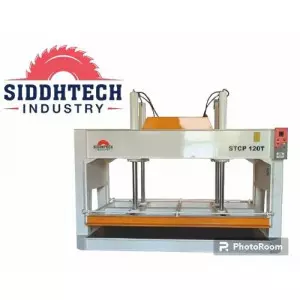
Overview Of Cold Press TechnologyWe Are Manufacturing Cold Press Machines Set Up To Bond Materials Using Uniform Hydraulic Pressure Without Applying Heat. This Method Supports Stable Adhesive Bonds Along With Preserving Surface Quality And Material Structure. Our Cold Press Machines Are Widely Used In Woodworking And Panel Processing Where Flatness, And Tightly Monitored Bonding Are Necessities.ApplicationsPlywood Manufacturing: Veneer And Sheet BondingFurniture Industry: Panel Laminat Continue